
Parliament – Friday 6 November 2026: The Executive Director of Legislative Sector Support, Ms Yoliswa Makhasi, says legislatures must be at the forefront of turning the tide in governance to arrest declining public trust and confidence, increase faith in state institutions and protect the country’s constitutional democracy.
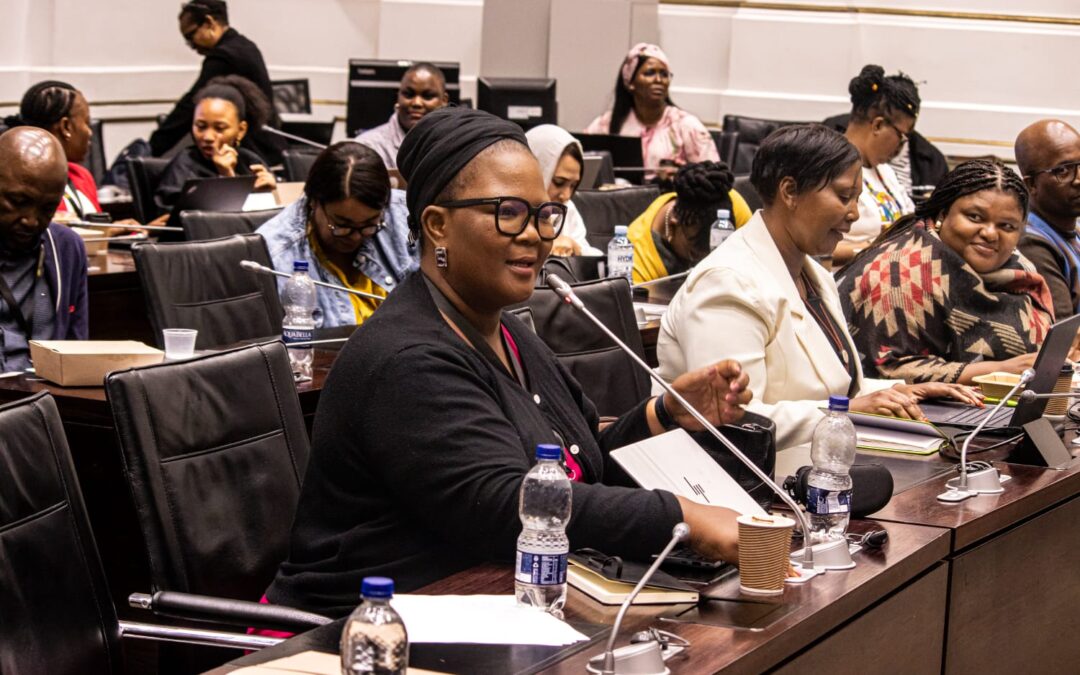
On behalf of the Secretary to Parliament, Ms Makhasi officially launched the first of the six Thursday capacity-building webinars organised in collaboration with the Inter-Pares agency of the European Parliament yesterday in Cape Town. Addressing a hybrid webinar, Ms Makhasi said the high level of distrust is a material threat that requires a business-unusual approach, particularly from legislatures as premier institutions of society with direct representation of all people in their diversity.
She said the partnership of the Parliament of South Africa, representing all 10 legislatures of South Africa, with the European Parliament’s Inter Pares agency, has prioritised collection, analysis and processing of objective data, information and knowledge to strengthen legislatures’ capacity to deliver on their constitutional mandate. She urged all researchers and knowledge workers to leverage partnerships to help legislatures and society tackle the country’s socio-economic challenges that include poverty, inequality, unemployment and gender-based violence that remained elusive over the years.
Four country case studies were presented, sharing best practices and experiences. South Africa’s viewpoint was presented by Mr Sithabiso Buthelezi, a Chief Researcher; Czech Republic’s case study by Dr Stefan Penchacek, a Director of the Parliamentary Institute; the Slovak Republic by Ms Natalia Svecova of the Parliamentary Institute; and the Netherlands’ case study was presented by Mr Martijn Schukkunk of the Second House.
Mr Buthelezi said a new approach has been adopted through, among others, a multi-year research plan, organising research colloquia, building multi-partner social compacts to optimise societal capacity to generate the valuable data needed and shifting the paradigm to an impact and outcomes-based approach to research.
Dr Pechacek said the country’s rising debt is treated as a leading challenge dominating the legislature’s research work. Ms Svecova said they prioritise comparative analysis as well as visibility and outreach to empower the legislators. Mr Schukkunk said they are guided by a research needs framework that is reviewed every year.
The weekly webinar series takes place on Thursday from 11:00 up to 3 December 2026 for the following topics:
- Making research more inclusive and participatory, including through lenses of citizen, gender and youth perspectives as parliamentary evidence.
- Connecting research to the parliamentary cycle, looking at how different research products can support legislation, budgeting and oversight at the right moment.
- Strengthening knowledge brokerage, exploring how parliamentary services can draw effectively on universities, experts, think tanks and other external sources of knowledge.
- Using digital tools and AI while strengthening institutional memory, with attention to research quality, confidentiality, retrieval, reuse and human verification.
- Building stronger sector-wide research and knowledge systems, exploring what can be shared or coordinated across legislatures while maintaining strong research capacity close to Members and committees.
The webinars are part of a broader empowerment programme that includes courses and exchange visits that will be undertaken between November 2026 and January 2027.
Issued by the Legislative Sector Support Division